
Why You Feel Responsible For Other People’s Emotions
────────── ✦ ──────────
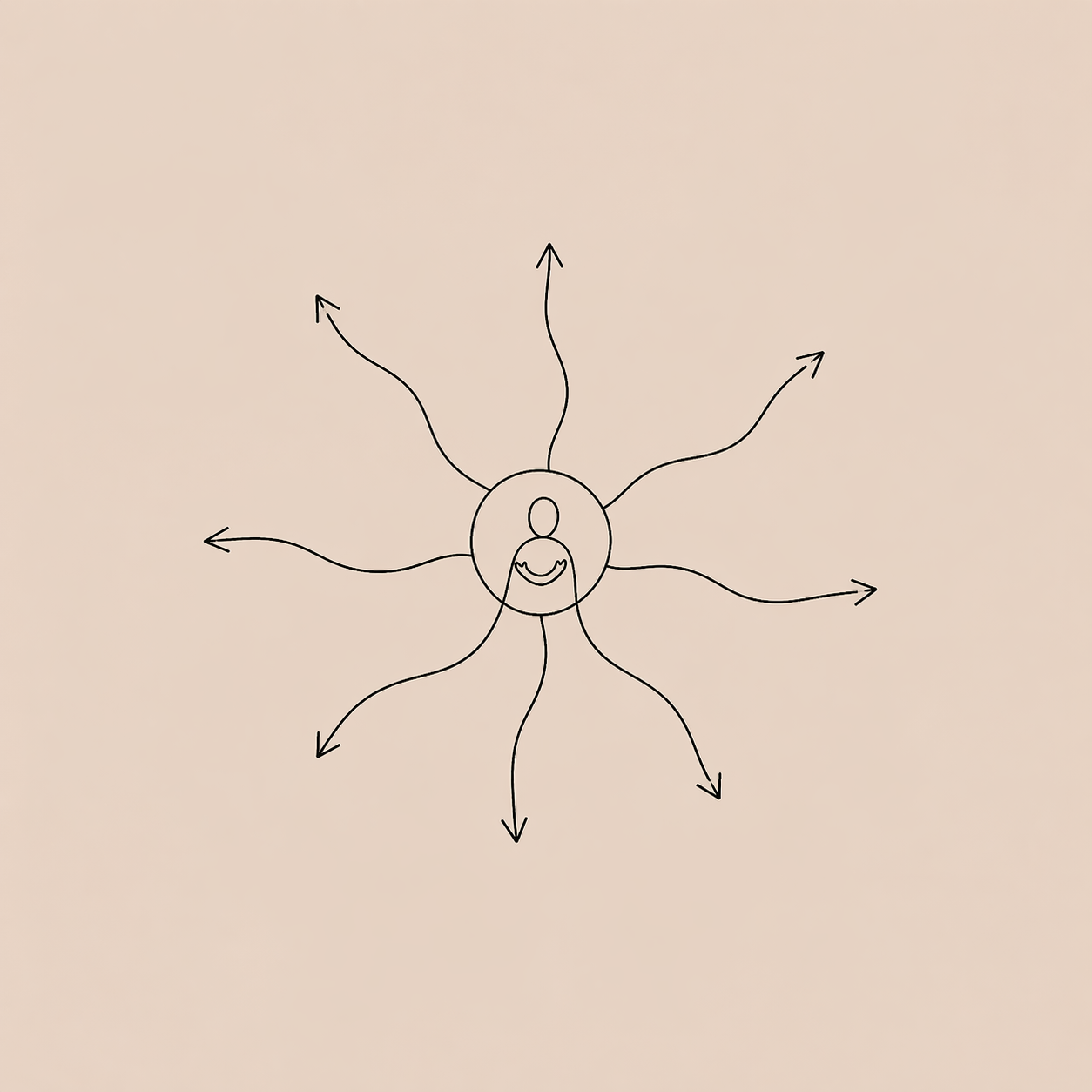
Being responsible for other people’s emotions is not a conscious choice or pattern that we often notice. It becomes a reflex and an automatic response that we learned (without knowing that we learned it in the first place). Many people can remember where and when they learned how to drive, when they had their first date, their first embarrassing moment in high school, or accidentally calling their teacher “mom” in elementary school. How many of us remember the moment we learned that we needed to be the peacekeeper and caretaker for the needs and feelings of everyone around us?
The internal experience can look and feel like noticing the slight shift in someone’s tone, their use (or lack thereof) of punctuation in a text message, mentally tracking someone’s body language, adjusting your own tone and energy in real-time to match theirs, and overall feeling a sense of responsibility to figure out why someone seems not okay and what you need to do to fix that.
What this actually looks like
This might show up in small, quiet ways every day. Like when you walk into a room, whether it be friends or colleagues or your significant other, and you’re about to say something honestly or share exciting news - but you pause and scan everyones mood to see how you should act and whether its appropriate for you to take up space or if someone seems bored or lonely you need to attend to them first and then someone else looks like they’re upset so you want to offer them support and a listening ear and before you know it, you never shared your news, never got to show up as someone other than a fixer and good listener, and there wasn’t room for you to consider what you wanted the experience to be.
But it’s familiar, and you're good at it, so it must be okay, right? Or when you do take the brave step of sharing something vulnerable (after practicing and rehearsing, days and weeks of internal conflict of if you’re overreacting or if your thoughts and emotions are actually valid because if they aren’t shouldn’t you just let it go?) so then you check the other persons mood and ask about their day to see if now is a good time to express yourself because you want to make sure the other person is in a good space to receive hearing about (god forbid) YOUR emotions, so you also pause and change how you say it so it lands better, constantly apologizing during the entire process as if you are causing harm for existing or sharing how you feel about the movie you didn’t like last night or how you didn’t actually want to attend that 6 hour dinner where you knew no one and really wanted to attend this event that you’ve been looking forward to for months. The original needs and feelings go unnoticed, silenced, and reduced to make others feel better.
So where does this come from?
Maybe you grew up having to silence your needs, make sure everyone else was okay first, and hide your own emotions so you didn’t add more stress to your parents, especially if they were coming to you to vent. That isn’t fair, and it often meant holding onto the emotional labor of adults as a child, learning pretty quickly how to show up as the fixer, the people-pleaser, the mediator, the peacekeeper, the “easy” one. You learn to read the room, adjust yourself, and make sure everyone else is okay because it feels like that’s your role, and over time, that doesn’t feel like something you learned, it just feels normal, expected, like second nature, like it’s your responsibility to carry other people’s emotions even when it was never yours to hold in the first place.
Why you keep doing this (even when you don’t want to)
It’s hard to let go of this because if you don’t, people will be mad, disappointed, leave, call you selfish, say you’re too needy or too much. So instead, you end up repeating the pattern, saying yes, not having boundaries, not knowing your own needs and wants and that you are allowed to have them.
And over time, that doesn’t just go away. It builds. Quietly, but strongly. There is resentment that builds up quietly but strongly over time, because when the hell is it going to be your turn to receive care and attunement? It turns into anger, burnout, frustration, and sadness.
If this feels familiar
If this feels familiar, you are not alone, and maybe this is the first time you’re putting words to something you’ve always felt. You deserve to feel heard, seen, validated, and held. It’s not your fault, you aren’t broken, and you’ve likely been showing up a certain way to be accepted by others. You don’t have to do that in the same way anymore, and you are allowed and deserving to take up space authentically without silencing yourself for the sake of others. You deserve care too, the same level of care you’ve been giving to others.
In therapy, this can start to look like naming and noticing the pattern, recognizing when it happens, having self-compassion for yourself when you do notice it rather than being self-critical about it, being appreciative for the role it once served but now letting that part know it is allowed to show up and respond in different ways/behaviors/actions, and learning that putting yourself first isn’t selfish, it is healing. You don’t have to figure this out on your own.