
The Eldest Daughter Experience: Why You Carry More Than You Should
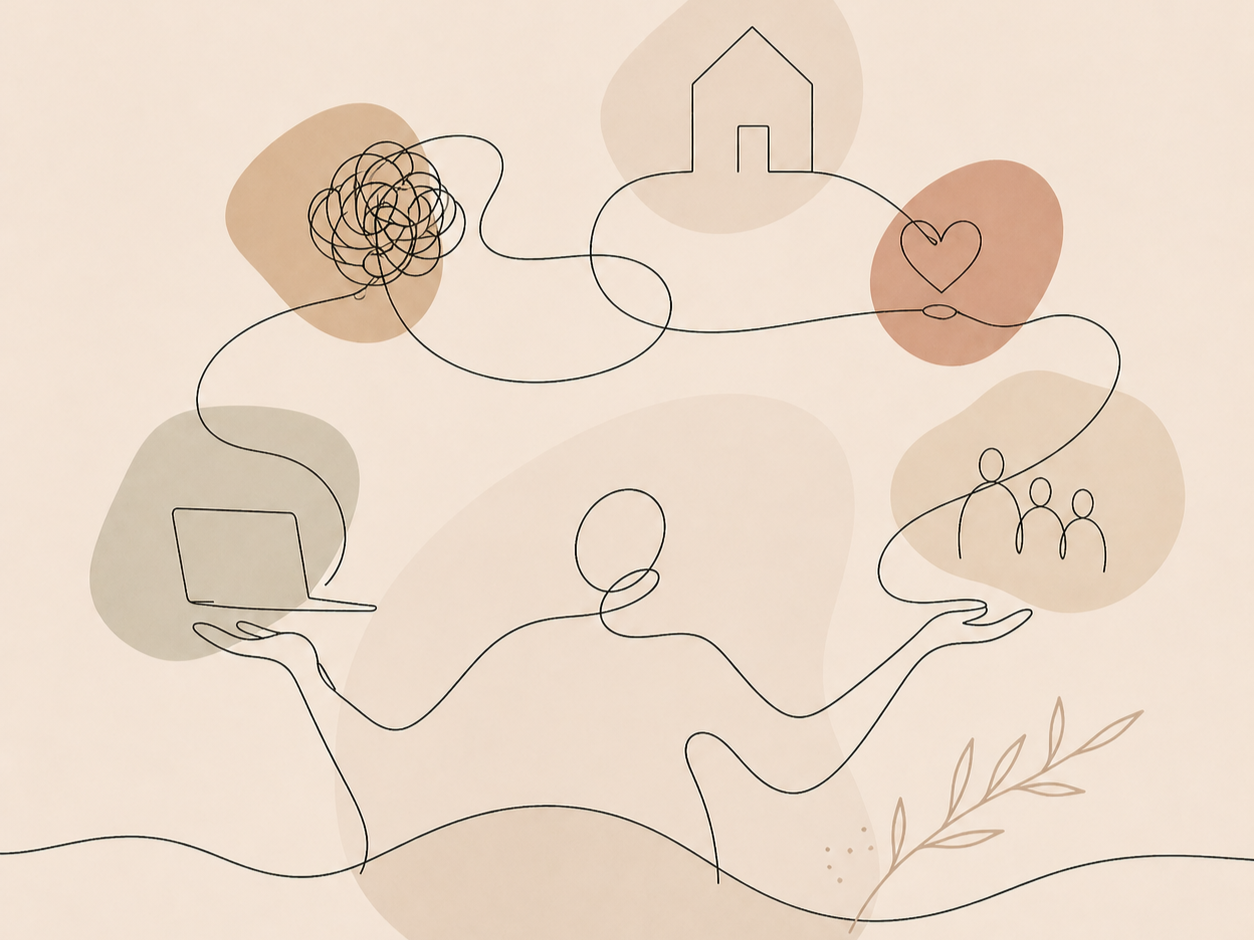
When You’re The One Who Handles Everything
You grew up being called the "responsible" one and "mature" for your age. The one who was always so careful, self-aware, and an "old soul". Eventually, you just started wearing these labels like a badge of honor. Your friends turn to you for advice, your family members confide in you, and even strangers at the airport or grocery store start to tell you their life story without even asking your name. When you enter a space, you’re paying attention to things most people don’t even think about - shifts in tone, who seems off and might need help, what the energy in the room feels like, and whether someone might need something before they even say it.
Without really thinking about it, you adjust. You show up as steady, helpful, and easy to be around. Someone who can handle things. At the same time, you’re managing yourself, not having your own needs or emotions, and making sure you’re not adding to anything or making things harder.
Over time, you become the one people turn to. The one who keeps things calm. The one who helps everyone else regulate. This can start really early. With siblings, you take on a role that feels more like a parent. With parents, you show up in ways that feel more like you are supporting them, rather than their child, who needs their support.
You’re already anticipating what might be needed and preparing to take care of it, often before anyone even asks.
It Starts Earlier Than People Realize
It doesn't usually start in an obvious way. A lot of the time, it looks normal.
A parent venting to you about the other parent. Turning to you when they're stressed or overwhelmed. You listen, validate them, and sometimes try to fix whatever is going on (even though you didn’t cause it). Maybe you weren’t explicitly asked to take on this role, but you start to feel responsible for it anyway. It fit, so it stuck.
At the same time, you're paying attention to how much your parent is already carrying. You don't want to add to it. So you start to adjust. You take initiative without being asked. You monitor what you say. You listen more than you share.
You try to do things right. You hold yourself to high expectations. You avoid making mistakes. You focus on being helpful and not creating more stress.
Over time, this becomes the way you show up. Not because it was ever really your job, but because it was what the environment seemed to need from you.
There Wasn’t Really Space For You
Because you were the one holding everything together, you didn’t really get to be a kid. There wasn’t room to make mistakes, to need help, or not be the steady, easy one. So you learned to keep it in and figure it out on your own.
Over time, you stop acknowledging your own needs, your own stress, and how much you’re actually carrying. You get used to being the support system instead of having one.
You stop asking for help. You stop expecting it. You anticipate other people’s needs, carry their emotions, and feel responsible for how things turn out.
It’s not just that you became responsible. It’s that there wasn’t really space for you not to be. Even if no one said it directly, there was an understanding that if you stopped holding everything together, things might actually fall apart. And it was your job to make sure that didn't happen.
It Doesn’t Just Stay In Childhood
This doesn’t just go away when you get older. It follows you into your relationships, your work, and the way you move through your day.
You make sure everyone else is okay. You pay attention to whether people are having a good time, if something feels off, or if someone might need something. You step in before anyone even asks and anticipate their needs.
Maybe you take on more than what’s expected of you. Extra things at work. Extra emotional labor in your relationships. You continue managing your family’s emotions, even as an adult.
You avoid vulnerability. You avoid anything that could be perceived as a burden. You keep things to yourself and figure it out on your own.
You hold yourself to high expectations. At work, you’re the one who gets things done and does them well. In relationships, you show up consistently. You don’t drop the ball.
And underneath all of that, there can be this sense that it’s just easier to rely on yourself. So you become hyper-independent.
Even when you don’t actually want to be.
You Were Never Meant To Carry This Alone
None of this was your fault. And I know that's easy to say and hard to actually believe. You’re allowed to take up space. To have needs and wants. To not have everything together all the time.
It was never your job to parent in your family of origin. You weren’t supposed to be the one holding everything together.
You don’t have to be perfect. You’re allowed to make mistakes. You’re allowed to be messy. You’re allowed to show up as you are, not just as the version of you that feels easiest for everyone else.
You don’t have to overfunction to be worthy of care or connection. You’re human.
And even if it feels uncomfortable at first, you’re still allowed to have needs and be more open about them.
There’s also space here for self-compassion. You didn’t ask for this role. Whether it was placed on you directly or something you stepped into over time, it wasn’t your fault.
And just like you’ve spent so much of your life holding other people, you’re allowed to be held too.