
Why Accepting Help Feels Harder Than Giving It
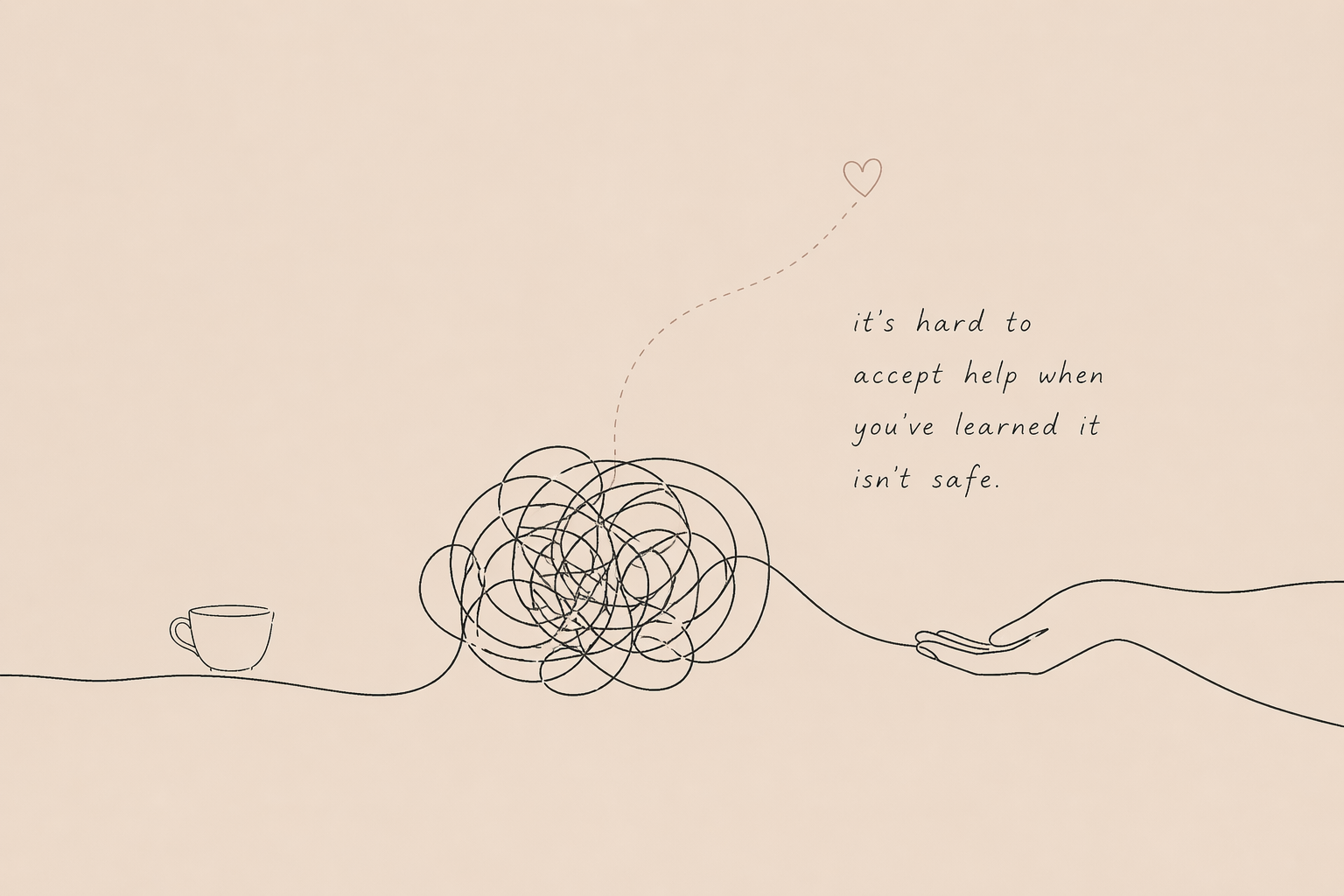
When Accepting Help Feels Hard
Accepting help isn’t always as simple as it sounds. Someone might ask, “Is there anything I can do?” and there’s a pause, because part of you wants to say yes. You need to help, so you almost say “Actually, it would be really helpful if…”, but then your mind starts going, and it’s like wait, no, that’s too much. I don’t want to burden them. I should be able to do this myself. What if this comes with something later, or I owe them back in return? So, instead, you just say “I appreciate it, but I’m good. Thank you so much though!” and then you move on, even though you’re actually not good.
What Happens Next
So, you just keep doing things on your own. You problem-solve, push through, and take on more than you probably should, telling yourself it is fine because you have handled things alone before, and you don’t actually need help and should be able to do it by yourself. Even when it starts to feel like a lot, even when it feels truly impossible for one person to carry, it still feels safer to keep going than to accept or ask for help. Because asking means risking something. It means wondering if it will come back up later, if there was something behind it, if you’ll owe someone afterwards. It means taking up space. It is the fear that accepting support would make you too much for someone else.
Where This Comes From
Maybe when you needed help during your childhood or in past relationships, it was met by others with frustration, anger, or as an unnecessary stressor. Needing anything was a burden, so you learned to stop needing things. You started to figure things out on your own, handle things yourself, and even prioritize taking care of others before even considering what help you needed.
And on the rare occasions when you did ask for help, only when things got to a point where you genuinely could not carry it anymore, it didn’t always go well. The vulnerable, scary act of voicing a need was met with frustration about why you didn’t say anything sooner, or some other form of blame, which just reinforced what part of you already believed: that needing help wasn’t safe either way. It’s easier not to need anything at all than to risk what might come with it.
Why This Continues
Doing everything by yourself is exhausting, yet it offers a feeling of safety. It is on your timing, your conditions. You know what to expect. You do not have to rely on anyone else, and you don’t risk being disappointed, having it held against you later, or being seen as too needy or too much.
Asking for help requires trust: that the person will actually show up, won't make you feel worse, and won't make you pay for it later. And if your experience has taught you that those things are not guaranteed, why would you take that chance?
So you just keep doing it yourself. Because at least that way, it is predictable. And predictability, even when it is hard, feels a lot safer than vulnerability.
Something Different Is Possible
This isn’t about forcing yourself to ask for help before you’re ready, or deciding overnight that vulnerability suddenly feels okay. It’s slower than that, and more complicated. But it can start with recognizing that the way you learned to move through the world made sense, given what you experienced. You weren’t wrong to protect yourself. You were responding to something real.
The work is in slowly learning that not every relationship operates the same way. That needing something doesn’t automatically mean you’re a burden. That asking doesn’t always come with a cost. That there are people, and spaces, where it is actually safe to take up room.
That’s what therapy can be. Not a place where you have to have it together or explain yourself perfectly, but a space where you can start to practice something different. Where your needs aren’t too much. Where asking for help is, maybe for the first time, met with something other than frustration or blame. It’s met with acceptance, understanding, validation, and support.