
When Being Good With People Is Actually Something Else
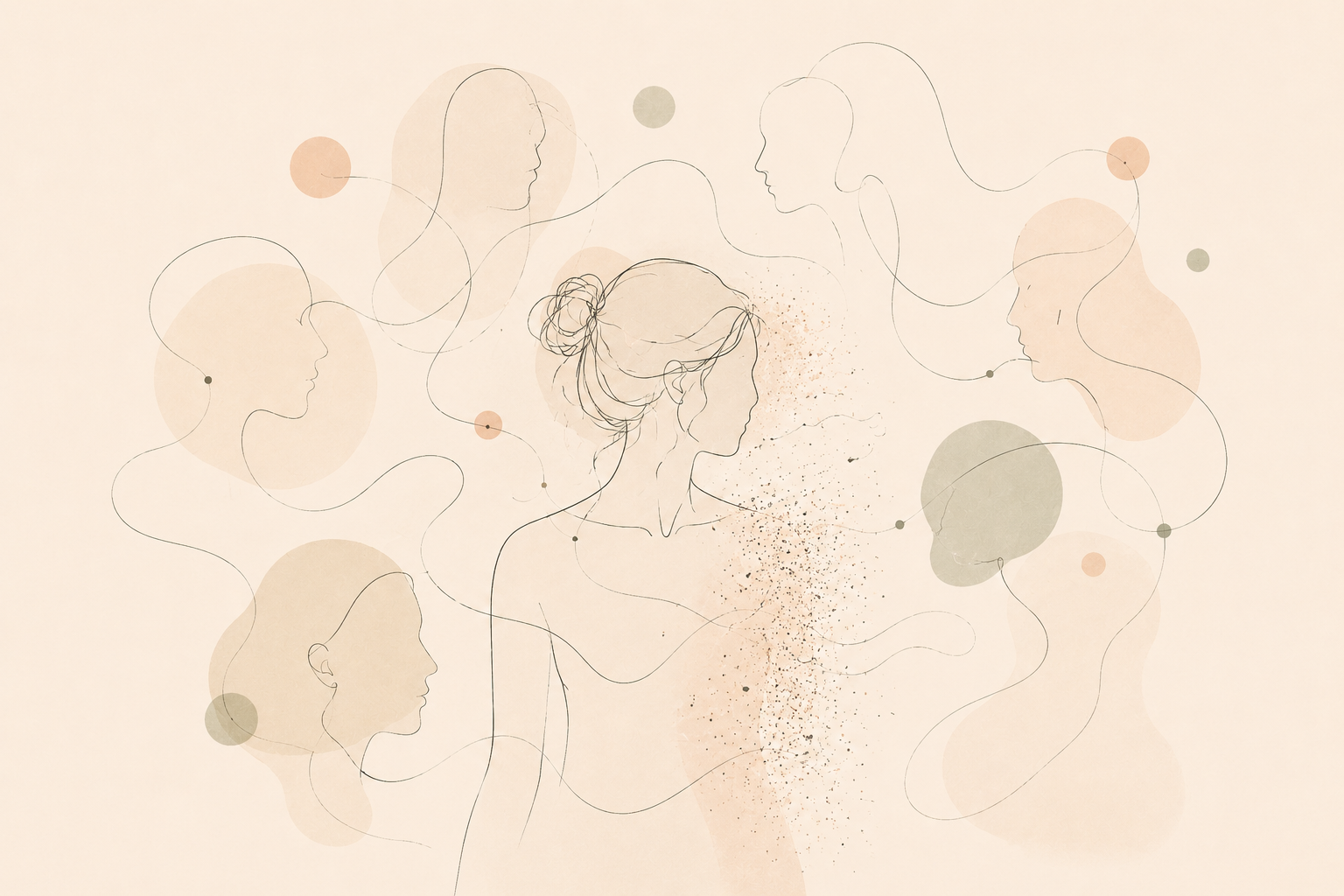
There's a pattern that shows up in people with late-diagnosed ADHD, in eldest daughters, in people who grew up in emotionally unpredictable environments. It looks like emotional intelligence from the outside. From the inside, it feels like never being fully off.
People have probably described you as thoughtful, emotionally intelligent, easy to be around, or "good with people" for most of your life. You notice when someone's tone shifts before they've finished the sentence. You can feel tension enter a room before anyone has named it out loud. And without really deciding to, you adjust — soften, smooth, make sure everyone is okay — before you've checked whether you are.
Those things are, in many ways, genuinely true. The empathy is real. The care is real.
But for some people, especially those who grew up feeling responsible for others' emotions, moods, or stability, being "good with people" can slowly become more than just a matter of personality. Because sometimes what gets praised as emotional intelligence is also something else underneath it.
When Keeping the Peace Becomes a Survival Role
There's a particular kind of person who gets very good at reading what a room needs and quietly providing it. At helping, mediating, absorbing, holding things steady. They become the family glue. The one who sat with a parent while they vented about the other parent. The sibling who held things together while everyone else fell apart. The child who learned, somewhere along the way, that adding to the weight of the room wasn't an option.
A lot of these people grew up in environments where keeping the peace didn't feel optional. Where someone's mood could shift the entire temperature of the house before breakfast. Where being observant wasn't a personality trait. It was how you stayed safe relationally.
So you got good at reading people quickly. At softening yourself before anyone asked you to. You figured out where things were heading and adjusted before they got there. Because you'd learned that other people's emotional states could become your problem fast, and that not managing them carefully enough had consequences. Conflict. Distance. The quiet but persistent message that you were too difficult, too emotional, too much.
And so you became someone who monitors carefully. Who makes it easier before anyone has to ask.
Over time that role gets reinforced constantly. People call you thoughtful, emotionally intelligent, easy to be around. They rely on you, lean on you, love you for it. And that part is real too. Which is exactly what makes it so hard to look at directly.
When Empathy and People-Pleasing Start to Look the Same
The disorienting thing about this pattern is that it genuinely doesn't feel like one. It feels like kindness. Like caring about people. Like just being someone who pays attention. And that's not wrong. Those things can be true at the same time as everything else that's also happening.
But a lot of people start noticing, usually in therapy or in moments of exhaustion they can't quite explain, that some of what they've always called empathy is also tied to something that looks more like fear. Not dramatic fear. Just the low-level kind that hums in the background. The awareness that disappointing someone feels disproportionately heavy, that conflict costs more than it seems to for other people, that being "too much" is a thing you actively try not to become.
So the self-monitoring becomes automatic. You over-explain before anyone has had the chance to misunderstand you. Your own feelings get quietly set aside, not because they don't exist, but because someone else's situation always seems to warrant more space. When a relationship feels tense, the first question is what you did wrong, not whether something was done to you. And what you actually want in a given moment can be genuinely hard to access when the louder question has always been what everyone else needs first.
For people with ADHD (particularly inattentive-type ADHD or those diagnosed later in life) and the rejection sensitivity that often comes with it, this gets more layered. When being misread, criticized, or rejected feels especially painful, you develop a kind of preemptive social awareness. Before anyone has signaled that something is off, you're already adjusting. The masking and the people-pleasing end up feeding each other in ways that become genuinely hard to untangle.
For people with histories of parentification, traumatic childhoods, emotional unpredictability, or relational instability, that hyper-awareness doesn't stay a coping strategy. It gets woven into how they understand themselves. It stops feeling like something they do and starts feeling like something they are.
At some point, the question shifts. Instead of "What do I feel?" you find yourself living inside the question "What version of me keeps this relationship safe?" And not even noticing that the shift happened.
The Cost of Over-functioning for Everyone Except Yourself
These patterns are hard to question in part because they work. You do become someone people trust, lean on, turn to. You become genuinely skilled at reading emotional undercurrents and navigating them carefully. That's real. That's not nothing.
But a lot of people hit a wall eventually. A specific kind of exhaustion that's hard to explain, where they realize they've gotten very good at caring for everyone except themselves.
Accepting help feels uncomfortable in a way that's hard to articulate. Trusting your own read on a situation is harder than it should be. Figuring out what you actually want, separate from what would keep everyone else okay, can feel almost foreign. And disappointing someone, even in a small and completely reasonable way, produces guilt that seems wildly out of proportion to what actually happened.
Underneath all of it is usually a quieter fear: if I stop being this version of myself, who am I?
Because at a certain point, these patterns stop being behaviors and start being your identity. A role you didn’t ask for but had to take on, and got very good at it. The caretaker. The reliable one. The person who holds things together. And when you start to shift, when you begin taking up a little more space, saying no to things, becoming less immediately available, the people who got used to the older version of you don't always respond the way you'd hope. Sometimes they push back. Sometimes they get hurt in ways that feel familiar and that trigger the old fear all over again.
And then your internal dialogue looks like: “See? This is why I shouldn't have needs.”
What Happens When You Stop Over-functioning
One of the more painful things to sit with is realizing that you were not always loved only for who you were. You were also rewarded, sometimes very consistently, for how easy you were. For how little you asked for. For how reliably you showed up for everyone else.
And that's a genuinely complicated thing to grieve.
Healing here isn't about becoming cold or indifferent or suddenly putting yourself first in some dramatic way. It's slower and quieter than that. It usually starts with just noticing. Catching yourself softening mid-sentence before anyone asked you to, checking someone's face while you're still talking to make sure you're still okay with them, adjusting the version of yourself you brought into the room before you've even fully arrived.
That noticing creates a little space. And the space is where things actually start to shift.
There is real grief in this process for a lot of people. Grief over how early the monitoring started. Over how much of themselves went quiet inside relationships over the years. Over the fact that the version of them that got the most praise was often the one that cost the most to sustain.
But something also becomes possible on the other side of that grief. Not a transformation. Just a slow change in the question you're living inside of.
From: “How do I keep everyone else okay?”
To: “What would it feel like to stop disappearing inside relationships?”
That second question doesn't have a clean answer. But it's usually where things start to move.
A Space That’s Actually Yours
If this resonated with you, it might be worth exploring in a space that's actually yours. I work with adults navigating people-pleasing, identity, ADHD, and the emotional patterns underneath. Including the exhaustion of having held it together for so long. Virtual therapy in Maryland and Colorado.